








Coach Hire London: 13 Things to Check Before Booking Group Transport
Moving a group around London is a very different challenge from driving yourself across town. Whether you’re organising a wedding shuttle, a school trip, an airport run for a large family, a corporate away day, or transport for a sporting event, getting everyone to the same place at the same time can be surprisingly involved. The right coach hire London takes that worry off your plate. The wrong booking can leave a group stranded on a pavement watching the clock.
This guide walks through what genuinely matters when you arrange coach hire London, from the size of vehicle you actually need to the questions worth asking about drivers, licensing, and pricing. London adds its own complications, including congestion and emission zones, tight pickup points, and famously unpredictable traffic, so a little planning goes a long way. Use the thirteen checks below to book with confidence and sidestep the pitfalls that catch first time organisers out.
13 Things to Check Before Booking Coach Hire in London
Tip 1: Count heads properly, then add a margin
The first decision is vehicle size, and accuracy pays off. Coaches and minibuses come in a range of capacities, from around 8 and 16 seats up to full 49 and 53 seat coaches. Count your group honestly, then leave a little headroom for late additions and for comfort on a longer trip. A group squeezed into too few seats is a miserable journey, while a half empty oversized coach is just money wasted.
Tip 2: Match the vehicle type to the journey
A short city centre shuttle has different needs from a long motorway run. For the longer journeys, ask about luggage space, reclining seats, air conditioning, and onboard facilities such as a toilet. A wedding or corporate event might call for a more executive finish, while a school trip prioritises seatbelts and a straightforward, reliable vehicle. Be clear about the journey so the operator can match the right coach to it.
Tip 3: Check the operator’s licensing and credentials
Reputable operators hold the appropriate operator licence, and their drivers hold the correct category of licence and a valid Driver Qualification Card. For trips involving children, ask about the operator’s safeguarding arrangements and driver checks. A trustworthy company answers these questions readily, so any reluctance is a red flag worth heeding before you commit.
Tip 4: Understand London’s congestion and emission zones
Central London’s Congestion Charge and the Ultra Low Emission Zone can affect both the routing and the cost. A good London operator will know which charges apply to your journey and whether they’re built into the quote or added separately. Ask directly, so there are no surprises on the invoice, especially for trips that cross into or through the central zone. For the current charges and zones, the reliable source is Transport for London.
Tip 5: Plan realistic pickup and drop off points
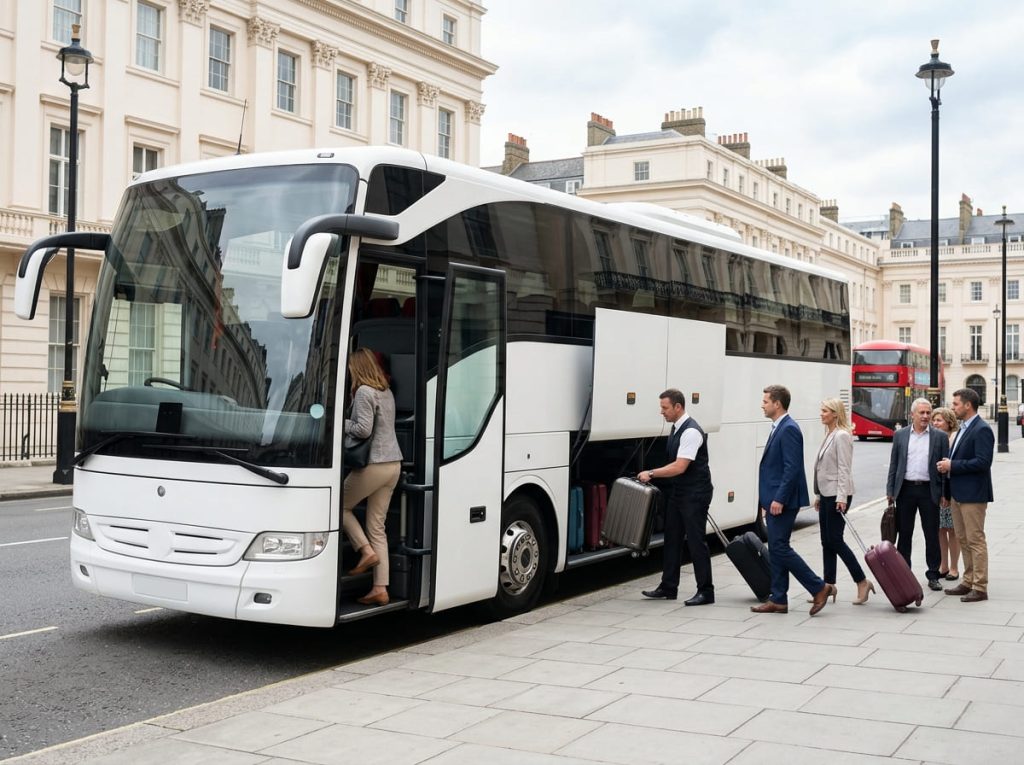
Large vehicles can’t stop just anywhere in London. Kerbside space is limited, many roads carry loading restrictions, and some venues have no practical coach access at all. Agree sensible pickup and set down points in advance, ideally where a coach can wait safely, and share clear directions with your group so nobody’s left hunting for the vehicle in the wrong street.
Tip 6: Build in time for London traffic
Traffic in the capital is rarely predictable. For airport transfers and timed events, allow a generous buffer so a jam on the way doesn’t turn into a missed flight or a late arrival at a ceremony. Talk the timings through with your operator, who’ll know the routes and the usual delays, and agree a departure time that protects against the worst of it.
Tip 7: Clarify exactly what the price includes
A quote should be transparent. Ask whether it covers the fuel, the driver hours, the parking, the tolls, the congestion and emission charges, and any waiting time. On longer days, driver hours are regulated for safety, so a very long itinerary may need a second driver or a rest period. Knowing the full picture upfront saves you from awkward extras later.
Tip 8: Ask about waiting time and multi stop trips
Plenty of group trips aren’t a simple one way run. Weddings often need a coach to wait and return, event transport may involve several pickups, and a day trip means a wait at the destination. Spell out the full itinerary, stops and waiting periods included, so the quote reflects the real shape of your day rather than a single leg of it.
Tip 9: Confirm the luggage and equipment space
An airport transfer with a large group means a lot of suitcases, and a sports team or a music group may have bulky kit. Check the luggage capacity matches what you’re actually carrying. It’s far better to confirm this at the booking stage than to find the hold full and bags left on the pavement.
Tip 10: Get the booking and itinerary in writing
A clear written confirmation protects everyone. It should set out the date, the times, the pickup and drop off points, the vehicle, the price and what it includes, and a contact number for the day. Having the itinerary agreed in writing means there’s no confusion about who’s going where and when.
Tip 11: Sort the accessibility needs in advance
If anyone in your group has mobility needs, raise it when you book. Some vehicles offer easier access or can take a wheelchair, but availability varies, so it needs arranging ahead rather than on the day. A good operator will help you find a suitable vehicle.
Tip 12: Keep a direct line to the driver or operator
On the day, things shift. A group runs late, a road closes, a plan changes. Having a direct contact number for the driver or operator means you can communicate quickly and adapt. Share that number with a second person in your group as a backup point of contact.
Tip 13: Read reviews and compare a couple of operators
Before booking, look at recent, independent reviews and get comparable quotes from more than one operator. Price matters, but so do reliability, the condition of the vehicles, and the quality of the communication. A slightly higher quote from a well reviewed operator can be the better value when the day actually arrives.
Minibus Versus Full Coach for London Group Travel
Choosing between a minibus and a full size coach comes down to group size, luggage, and the feel you want. A minibus, typically up to around 16 seats, is nimble for smaller groups, easier to manoeuvre on London’s tighter roads, and often the right call for an airport transfer or a modest event party. It can reach places a large coach simply can’t.
A full coach, in the 33 to 53 seat range, is the efficient choice for larger groups, longer journeys, and occasions where everyone needs to travel together. For a big wedding, a corporate conference shuttle, or a school trip, one coach is usually simpler and more cost effective than several minibuses. Weigh up the total head count, the luggage, the access at your venues, and the journey length, then let the operator recommend the most sensible vehicle for the job. If your group is on the smaller side, it’s worth comparing against minibus hire before you commit.
What Affects the Cost of Coach Hire in London
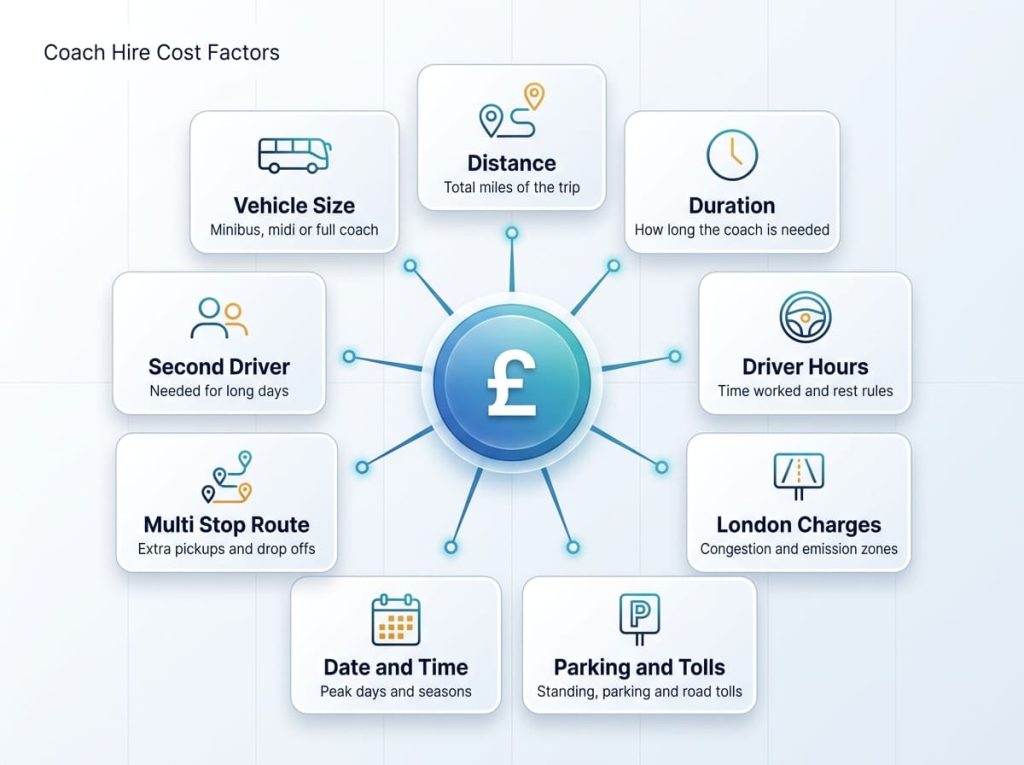
Coach hire London pricing isn’t a single flat rate, and the honest answer to what it costs is that it depends on the job. The main factors are the size of vehicle, the distance and duration of the journey, and the number of driver hours involved. The London specific costs then come into play, including the congestion and emission charges, the parking, and any tolls.
Other things that shape the price include the time of day and day of the week, the season, the waiting time, any multi stop itinerary, and whether a second driver is needed for a long day under driver hours rules. Peak dates like summer weekends and the festive season get busier and book up early. For an accurate quote, share your full itinerary, group size, and any access constraints, and ask exactly what is and isn’t included.
Pickup Points, Access, and London Road Restrictions
London’s roads aren’t built for large vehicles to stop wherever is convenient. Red routes, bus lanes, loading restrictions, and narrow streets all limit where a coach can pause to pick up or set down. When you plan, choose pickup and drop off points where a coach can stop safely and legally, and check whether your destination venue has coach access or a designated set down area.
For events and weddings, ask the venue directly about coach access and parking, since some have strict arrangements and some have none at all. Central London journeys should also account for the Congestion Charge and ULEZ. A London experienced operator will help you plan a route and stopping points that actually work, which is one of the real advantages of hiring locally rather than from far outside the city. Travellers weighing up an airport run in particular may want to compare the coach against dedicated airport transfer options first.
Luggage, Equipment, and Onboard Comfort
Comfort and capacity matter more than people expect, especially on the longer journeys. Confirm the luggage space suits your group, whether that’s suitcases for an airport run, instruments for a music group, or kit for a sports team. For trips of any length, ask about the air conditioning, the seatbelts, and whether the coach has a toilet and room to stretch.
If you’re providing refreshments or have specific needs, check the operator’s policy on food and drink onboard. Clear expectations about the comfort, the capacity, and the onboard facilities help you choose a vehicle that suits the occasion, so a long motorway trip or a full day out is pleasant rather than cramped.
Final Advice for Booking Coach Hire in London
Good group transport in London is mostly about clear planning and the right questions. Confirm your numbers and luggage, choose a suitable vehicle, check the operator’s licensing, agree sensible pickup points, and build in time for traffic. Get the itinerary and the price in writing, and make sure you understand what’s included, especially London’s congestion and emission charges.
When comparing providers, look for transparent pricing, well maintained vehicles, and strong, recent reviews. Get quotes from more than one operator, share your full itinerary so the prices are genuinely comparable, and choose the one that combines reliability with fair value for your particular London journey. And if your day involves a house move as well as group travel, an established firm like Super Man with a Van also offers removals across London.
Frequently Asked Questions
How much does coach hire in London cost?
There’s no fixed rate. The price depends on the vehicle size, the journey distance and duration, the driver hours, and the London charges such as congestion and emission fees, plus any waiting time or tolls. Share your full itinerary for an accurate quote.
What size coach do I need?
Count your group accurately and allow a little headroom. Minibuses cover the smaller groups up to around 16, while full coaches seat roughly 33 to 53. Tell the operator your numbers and luggage and they’ll recommend the right vehicle.
Are congestion and emission charges included?
Sometimes they are, sometimes they’re added separately, so always ask. A London experienced operator will tell you which charges apply to your route and how they appear in the quote.
Can a coach pick us up from any address?
Not always. London has many loading and stopping restrictions, so you may need an agreed pickup point where a coach can stop safely. Check the venue access in advance, especially for weddings and events.
How far ahead should I book?
As early as you can for peak dates like summer weekends, the festive season, and major events, when vehicles book up quickly. For the quieter periods, a few weeks of notice is often enough, but earlier is always safer.